Few images in Western art have embedded themselves so deeply into the cultural imagination as Henry Fuseli’s The Nightmare (1781). Erotic, unsettling, and psychologically charged, the painting became an instant sensation when first exhibited in 1782 and remains one of the most iconic works of the Romantic era. Its blend of supernatural terror, dream symbolism, and ambiguous meaning continues to provoke debate among art historians and viewers alike.
🌙 A Painting That Shocked 18th‑Century London
When The Nightmare debuted at the Royal Academy in London, critics reacted with a mix of horror and fascination. Fuseli had exhibited before, but nothing had prepared audiences for this bold, disturbing vision. The painting’s overt sensuality and demonic imagery were considered scandalous, yet they also propelled Fuseli to fame.
The work was so popular that Fuseli produced several additional versions, and engraved reproductions circulated widely. It quickly became a touchstone for Gothic literature and visual culture, influencing writers such as Mary Shelley and shaping the emerging Romantic fascination with the unconscious and the supernatural.
🖼️ What the Painting Shows
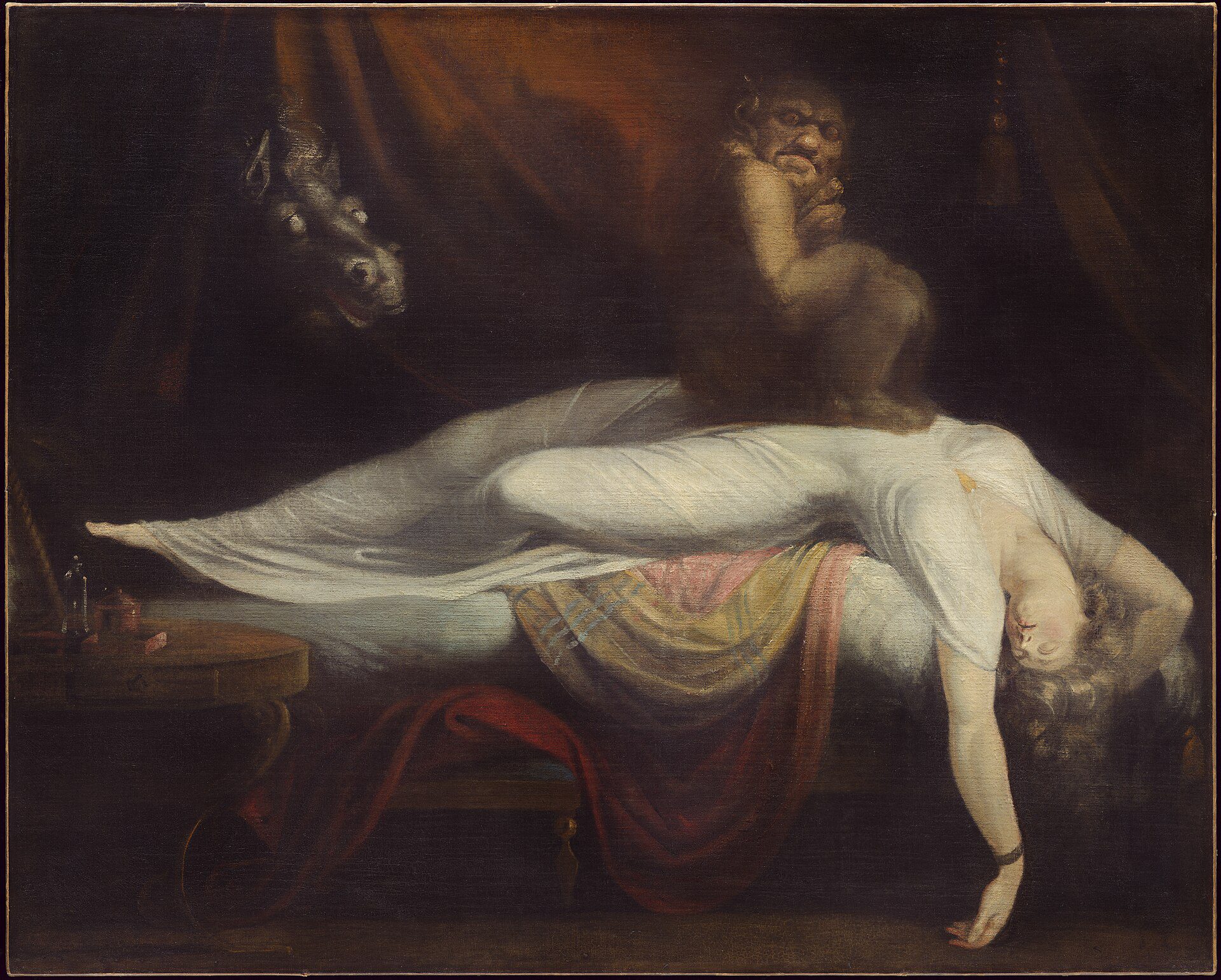
At first glance, The Nightmare presents a sleeping woman draped dramatically across a bed, her head hanging back, her body limp, and her posture suggestive of both vulnerability and ecstasy. On her chest crouches a grotesque incubus—an ape‑like demon whose presence is both menacing and strangely intimate. Behind the red velvet curtains, the head of a ghostly horse thrusts forward, its white, pupil‑less eyes staring directly at the viewer.
Fuseli’s use of chiaroscuro intensifies the drama: the woman’s pale body glows against the dark, claustrophobic room, heightening the sense of intrusion and dread.
🐎 Folklore, Etymology, and the Birth of a Nightmare
The painting’s imagery draws heavily on European folklore. The incubus represents the “mara,” a demonic figure believed to sit on sleepers’ chests, suffocating them and inducing terrifying dreams. The horse—literally the “night‑mare”—is a visual pun on the word itself.
In Scandinavian and Germanic traditions, nightmares were associated with nocturnal visitations by spirits, witches, or demons. Fuseli and his contemporaries were fascinated by these tales, as well as by the phenomenon of sleep paralysis, which often involves sensations of pressure on the chest and overwhelming dread.
🔍 Symbolism and Interpretation
One of the reasons The Nightmare endures is its ambiguity. Scholars have proposed multiple interpretations:
1. A Psychological Vision
The painting has been read as an early exploration of the unconscious—anticipating ideas later associated with Jung and Freud. The incubus and horse may symbolize repressed desires or fears erupting into the dream world.
2. A Sexual Allegory
The woman’s exposed neck, limp posture, and the demon’s position on her chest create an unmistakable erotic charge. Some critics believe Fuseli intended to evoke the taboo intersection of sexuality and terror, a theme common in Gothic art and literature.
3. Personal Obsession
A more biographical theory suggests the painting may reflect Fuseli’s unrequited love for Anna Landolt. On the reverse of the canvas lies an unfinished portrait of a young woman, possibly Landolt herself. Some scholars argue that The Nightmare expresses Fuseli’s frustration, longing, or even a form of symbolic revenge.
4. A Scientific Curiosity
Fuseli was also interested in contemporary theories about sleep and dreams. The woman’s inverted posture—head lower than her feet—was believed to induce nightmares, making the painting a kind of visual experiment in dream physiology.
🎨 A Cornerstone of Romanticism
The Nightmare is widely regarded as a foundational work of the Romantic movement. Rather than depicting a historical event or mythological scene, Fuseli painted an intangible idea: the experience of a nightmare itself. This shift—from external narrative to internal emotion—was revolutionary.
The painting’s theatricality, supernatural elements, and psychological depth influenced generations of artists, from William Blake to the Surrealists, who admired Fuseli’s willingness to explore the darker corners of the human mind.
🕯️ Legacy and Cultural Impact
Over the centuries, The Nightmare has been endlessly reproduced, parodied, and reinterpreted. It appears in political cartoons, horror films, book covers, and even medical textbooks on sleep disorders. Its imagery has become shorthand for the uncanny and the oppressive weight of fear.
Today, the original 1781 version resides at the Detroit Institute of Arts, where it continues to captivate visitors with its eerie blend of beauty and terror.
Conclusion
Henry Fuseli’s The Nightmare remains one of the most enigmatic and influential paintings of the late 18th century. Its fusion of folklore, psychology, eroticism, and dream imagery created a visual language that still resonates in contemporary culture. More than two centuries later, the painting retains its power to disturb, seduce, and provoke—an enduring testament to the Romantic imagination.