Posted on

Henry Fuseli’s The Nightmare: A Landmark of Romantic Imagination

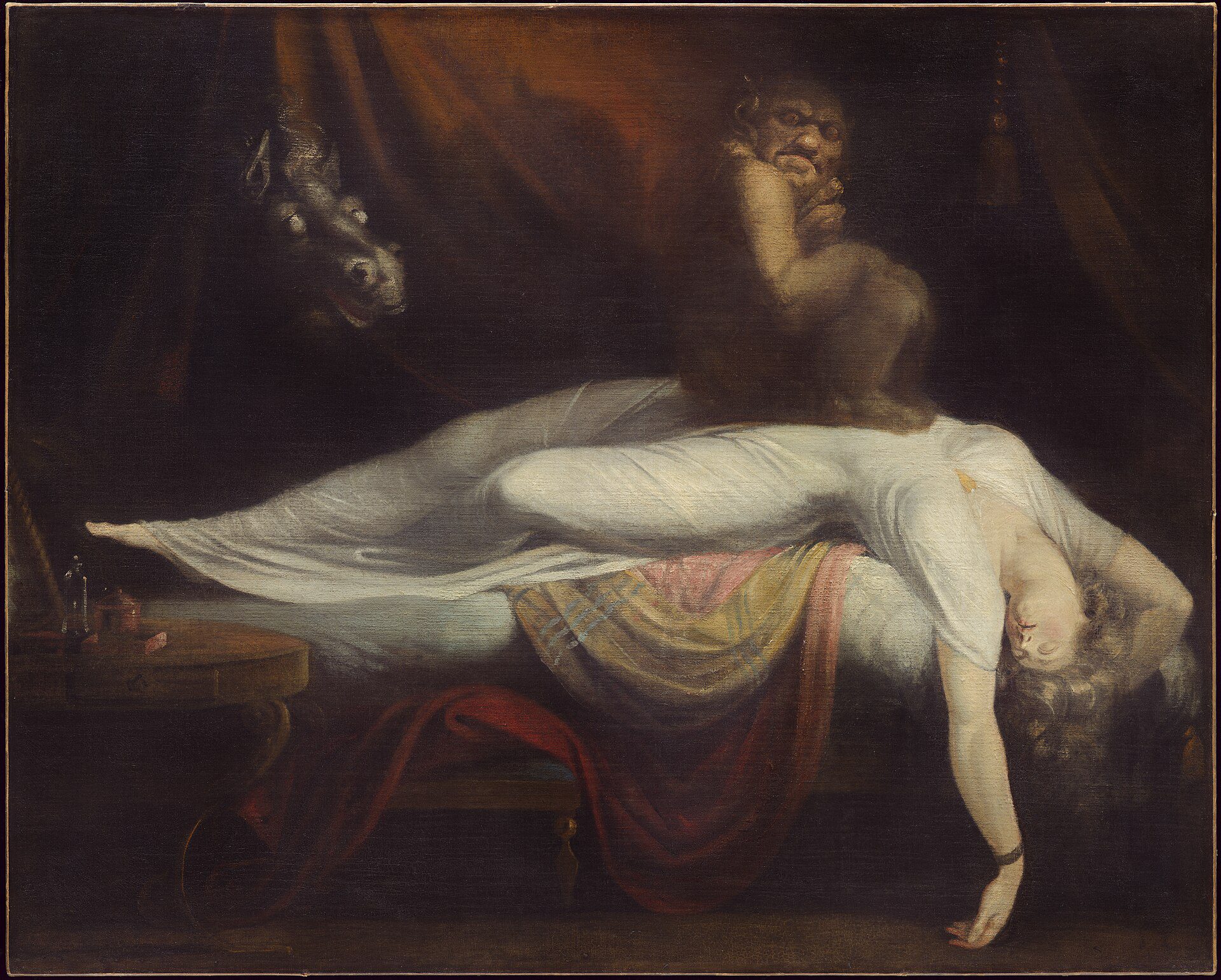
Few images in Western art have embedded themselves so deeply into the cultural imagination as Henry Fuseli’s The Nightmare (1781). Erotic, unsettling, and psychologically charged, the painting became an instant sensation when first exhibited in 1782 and remains one of the most iconic works of the Romantic era. Its blend of supernatural terror, dream symbolism, and ambiguous meaning continues to provoke debate among art historians and viewers alike.

🌙 A Painting That Shocked 18th‑Century London
When The Nightmare debuted at the Royal Academy in London, critics reacted with a mix of horror and fascination. Fuseli had exhibited before, but nothing had prepared audiences for this bold, disturbing vision. The painting’s overt sensuality and demonic imagery were considered scandalous, yet they also propelled Fuseli to fame.

The work was so popular that Fuseli produced several additional versions, and engraved reproductions circulated widely. It quickly became a touchstone for Gothic literature and visual culture, influencing writers such as Mary Shelley and shaping the emerging Romantic fascination with the unconscious and the supernatural.

🖼️ What the Painting Shows
At first glance, The Nightmare presents a sleeping woman draped dramatically across a bed, her head hanging back, her body limp, and her posture suggestive of both vulnerability and ecstasy. On her chest crouches a grotesque incubus—an ape‑like demon whose presence is both menacing and strangely intimate. Behind the red velvet curtains, the head of a ghostly horse thrusts forward, its white, pupil‑less eyes staring directly at the viewer.

Fuseli’s use of chiaroscuro intensifies the drama: the woman’s pale body glows against the dark, claustrophobic room, heightening the sense of intrusion and dread.

🐎 Folklore, Etymology, and the Birth of a Nightmare
The painting’s imagery draws heavily on European folklore. The incubus represents the “mara,” a demonic figure believed to sit on sleepers’ chests, suffocating them and inducing terrifying dreams. The horse—literally the “night‑mare”—is a visual pun on the word itself.

In Scandinavian and Germanic traditions, nightmares were associated with nocturnal visitations by spirits, witches, or demons. Fuseli and his contemporaries were fascinated by these tales, as well as by the phenomenon of sleep paralysis, which often involves sensations of pressure on the chest and overwhelming dread.

🔍 Symbolism and Interpretation
One of the reasons The Nightmare endures is its ambiguity. Scholars have proposed multiple interpretations:

1. A Psychological Vision
The painting has been read as an early exploration of the unconscious—anticipating ideas later associated with Jung and Freud. The incubus and horse may symbolize repressed desires or fears erupting into the dream world.

2. A Sexual Allegory
The woman’s exposed neck, limp posture, and the demon’s position on her chest create an unmistakable erotic charge. Some critics believe Fuseli intended to evoke the taboo intersection of sexuality and terror, a theme common in Gothic art and literature.

3. Personal Obsession
A more biographical theory suggests the painting may reflect Fuseli’s unrequited love for Anna Landolt. On the reverse of the canvas lies an unfinished portrait of a young woman, possibly Landolt herself. Some scholars argue that The Nightmare expresses Fuseli’s frustration, longing, or even a form of symbolic revenge.

4. A Scientific Curiosity
Fuseli was also interested in contemporary theories about sleep and dreams. The woman’s inverted posture—head lower than her feet—was believed to induce nightmares, making the painting a kind of visual experiment in dream physiology.

🎨 A Cornerstone of Romanticism
The Nightmare is widely regarded as a foundational work of the Romantic movement. Rather than depicting a historical event or mythological scene, Fuseli painted an intangible idea: the experience of a nightmare itself. This shift—from external narrative to internal emotion—was revolutionary.

The painting’s theatricality, supernatural elements, and psychological depth influenced generations of artists, from William Blake to the Surrealists, who admired Fuseli’s willingness to explore the darker corners of the human mind.

🕯️ Legacy and Cultural Impact
Over the centuries, The Nightmare has been endlessly reproduced, parodied, and reinterpreted. It appears in political cartoons, horror films, book covers, and even medical textbooks on sleep disorders. Its imagery has become shorthand for the uncanny and the oppressive weight of fear.

Today, the original 1781 version resides at the Detroit Institute of Arts, where it continues to captivate visitors with its eerie blend of beauty and terror.

Conclusion
Henry Fuseli’s The Nightmare remains one of the most enigmatic and influential paintings of the late 18th century. Its fusion of folklore, psychology, eroticism, and dream imagery created a visual language that still resonates in contemporary culture. More than two centuries later, the painting retains its power to disturb, seduce, and provoke—an enduring testament to the Romantic imagination.
Posted on

The living hush of Leonardo’s “Lady with an Ermine”

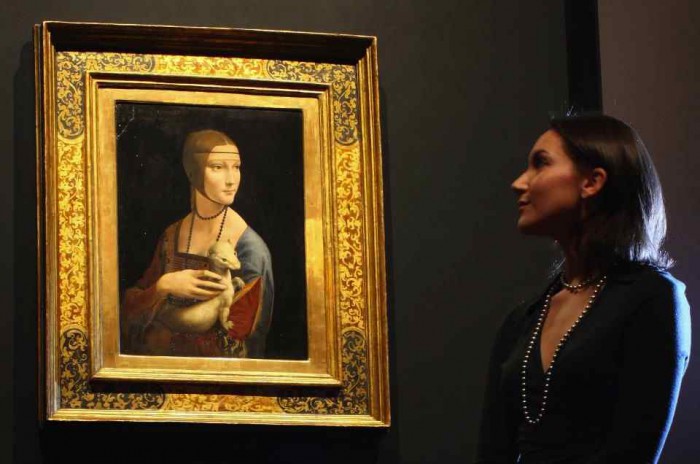
Leonardo da Vinci’s Lady with an Ermine is a quiet thunderclap—movement caught mid-thought, intimacy held without a single word. Painted around 1489–1491 in Milan, it is one of the rare moments where Renaissance portraiture feels less like a record and more like an encounter.

What you’re looking at

  • Title: Lady with an Ermine
  • Artist: Leonardo da Vinci
  • Date: c. 1489–1491
  • Medium: Oil on walnut panel
  • Size: Approximately 54 × 39 cm
  • Current location: Princes Czartoryski Museum, National Museum in Kraków, Poland

The sitter and the court that made her possible

The woman is Cecilia Gallerani, celebrated for her poetry, music, and intellect. She was the young mistress of Ludovico Sforza (“Il Moro”), the de facto ruler of Milan and Leonardo’s patron. Cecilia’s gaze is turned to the right—alert, answering someone we’ll never see. It’s not a pose; it’s a reply. Leonardo gives her not just presence but context: the Milanese court’s brightness, its codes, its performances. She was about sixteen; the portrait is mature because she was.

The ermine and its double meanings

The ermine is more than an accessory.

  • Purity and restraint: Medieval lore claimed an ermine would rather die than soil its white coat—an emblem of virtue and self-command.
  • A heraldic nod: The ermine was associated with Ludovico Sforza—a political signature hidden in plain sight.
  • A linguistic wink: Many scholars note a play on Cecilia’s surname—Gallerani—echoing the Greek word for weasel/ermine (galé), a courtly pun Leonardo would have enjoyed.

The animal and the woman mirror each other’s turn, doubling the portrait’s sense of interrupted motion.

Composition: a body that thinks

Leonardo breaks the static mold of profile portraiture. Cecilia is captured in a graceful torsion—shoulders angled one way, head another, mind elsewhere. Her right hand, alert and tensile, cups the ermine with a tenderness that isn’t soft. Light skims across skin and fur, letting shadow do the more intimate work. You can almost hear the pause between breath and speech.

  • Chiaroscuro and early sfumato: Edges soften where feeling begins; contours dissolve into atmosphere rather than ending with a line.
  • Psychological modeling: The “subject” here is attention itself—Cecilia’s and ours—caught as it shifts.

Dress, gesture, and the Milanese signature

The narrow black ribbon at her brow, the smooth coazzone hairstyle, the restrained geometry of the gown: these aren’t generic Renaissance cues but Milanese fashion circa 1490. The portrait’s elegance is in the edit—few ornaments, one charged symbol, no stagey background. The luxury is all in the handling of light.

Alterations and what time has done

The painting hasn’t reached us untouched.

  • Background: The current deep black is a later overpaint, likely 19th century, replacing a subtler field that once gave the figure more air.
  • Inscriptions: Additions such as “LA BELLE FERONIERE” misidentify the sitter and reflect later confusion with a different Leonardo portrait.
  • Under-drawing and revisions: Technical studies have shown pentimenti—Leonardo reworked the pose and the ermine, evidence of a mind thinking with the brush.

These changes layer the work with history without dimming its voice.

Provenance and survival

The portrait likely originated in Ludovico Sforza’s Milan. By the early 19th century it entered the Czartoryski collection, a cornerstone of Polish cultural heritage. It was seized during World War II and later recovered, a trajectory that adds a frail kind of triumph to its survival. Today it lives in Kraków, where people still lean in as if not to startle it.

Why it still disarms us

Because it feels private. Not staged, not heroic—simply alive. Leonardo doesn’t paint a type; he paints a moment of attention moving across a person’s face. The ermine isn’t a pet, it’s a key—unlocking identity through symbol, politics, wordplay, and touch. We meet Cecilia as someone we could interrupt and who might, if we’re lucky, turn back to us.

What do you notice first—the hand, the animal, or the thought passing through her eyes? Your answer is the painting working on you.

Fast facts

  • One of Leonardo’s few female portraits, alongside Ginevra de’ Benci, La Belle Ferronnière, and the Mona Lisa.
  • Innovative movement in portraiture: the three-quarter turn with an answering gaze was radical in its day.
  • Symbol as biography: the ermine condenses virtue, patronage, and wordplay into one living emblem.
  • An early masterwork in oil: Leonardo uses oil’s softness to model thought, not just flesh.

If you want to go deeper

  • Look closely at the right hand: its anatomy, pressure, and restraint tell you how Cecilia holds herself in public.
  • Trace the light across the ermine’s head and back; it’s a study in how attention moves.
  • Step back to feel the composition: a triangle of face–hand–animal, a circuit for the eye to loop through.

The portrait’s great trick is empathy disguised as form. It doesn’t just show you Cecilia—it lets you meet her.